The Demand Letter Engine for Personal Injury Claims
ByDESLY N.Marketing & Business Development·Law Firm / Legal Business Management·Jurisdiction-neutral
About this tool
This skill turns raw personal injury case records, police reports, medical records, bills, pay stubs, into a structured demand letter draft. It runs a fixed pipeline: records intake and chronology, damages calculation using the multiplier and per diem methods, a liability narrative built on duty, breach, and causation, full letter assembly, and a verification pass that checks every dollar figure and date against the source documents before anything is presented as finished. The methodology is transparent throughout. Damages figures are calculated using named, documented methods, not produced as an unexplained number. Liability language is built from established negligence frameworks for motor vehicle and premises cases. Every step that involves a judgment call, a damages multiplier, a margin above the calculated subtotal, a response deadline, is surfaced to the user for a decision rather than decided silently. This tool produces a drafting aid for a licensed attorney's review, not personalized legal advice, and does not establish any professional relationship with a buyer or a buyer's client. Outputs require professional review before use in any real matter. A verification step is built into the pipeline specifically so nothing reaches that review stage as an unchecked draft. All examples use fictional case data. No client, firm, or matter information is contained anywhere in this tool.
Preview before you buy:
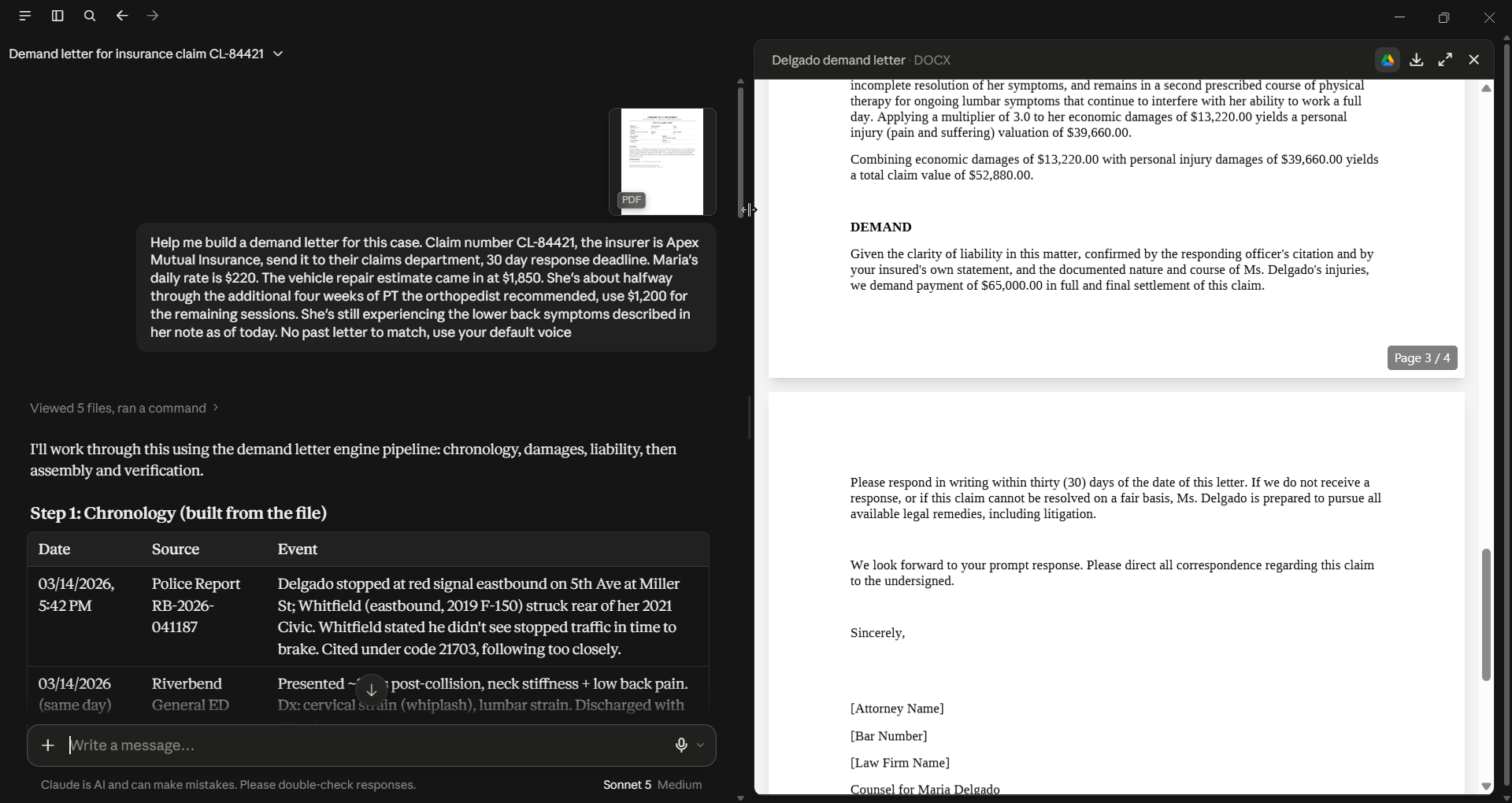
"Help me build a demand letter for this case. Claim number CL-84421, the insurer is [Insurer Name], send it to their claims department, 30 day response deadline." (attached: police report, ER discharge summary, PT log, orthopedic note, billing summary, pay stub for a fictional rear end collision case)
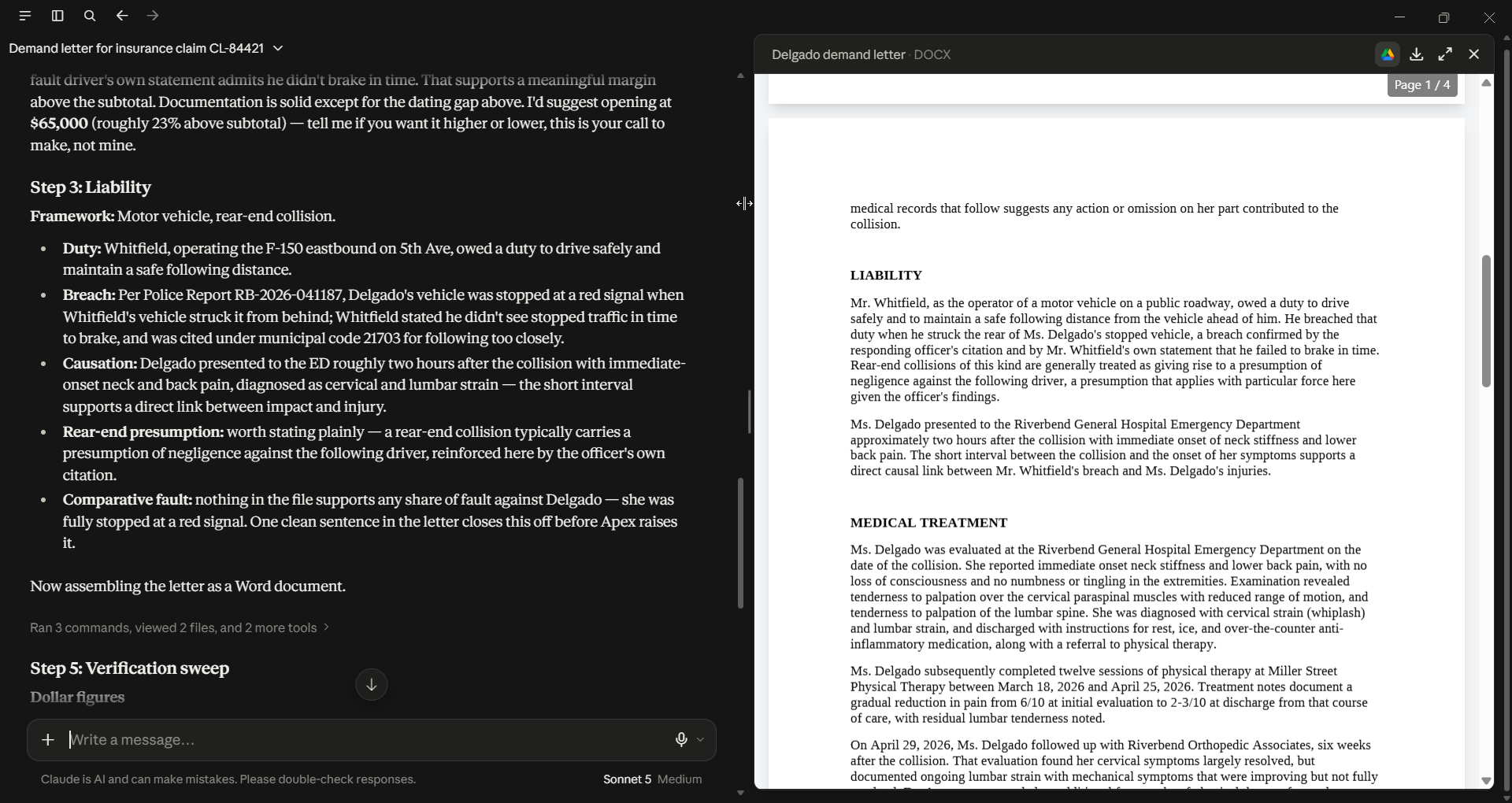
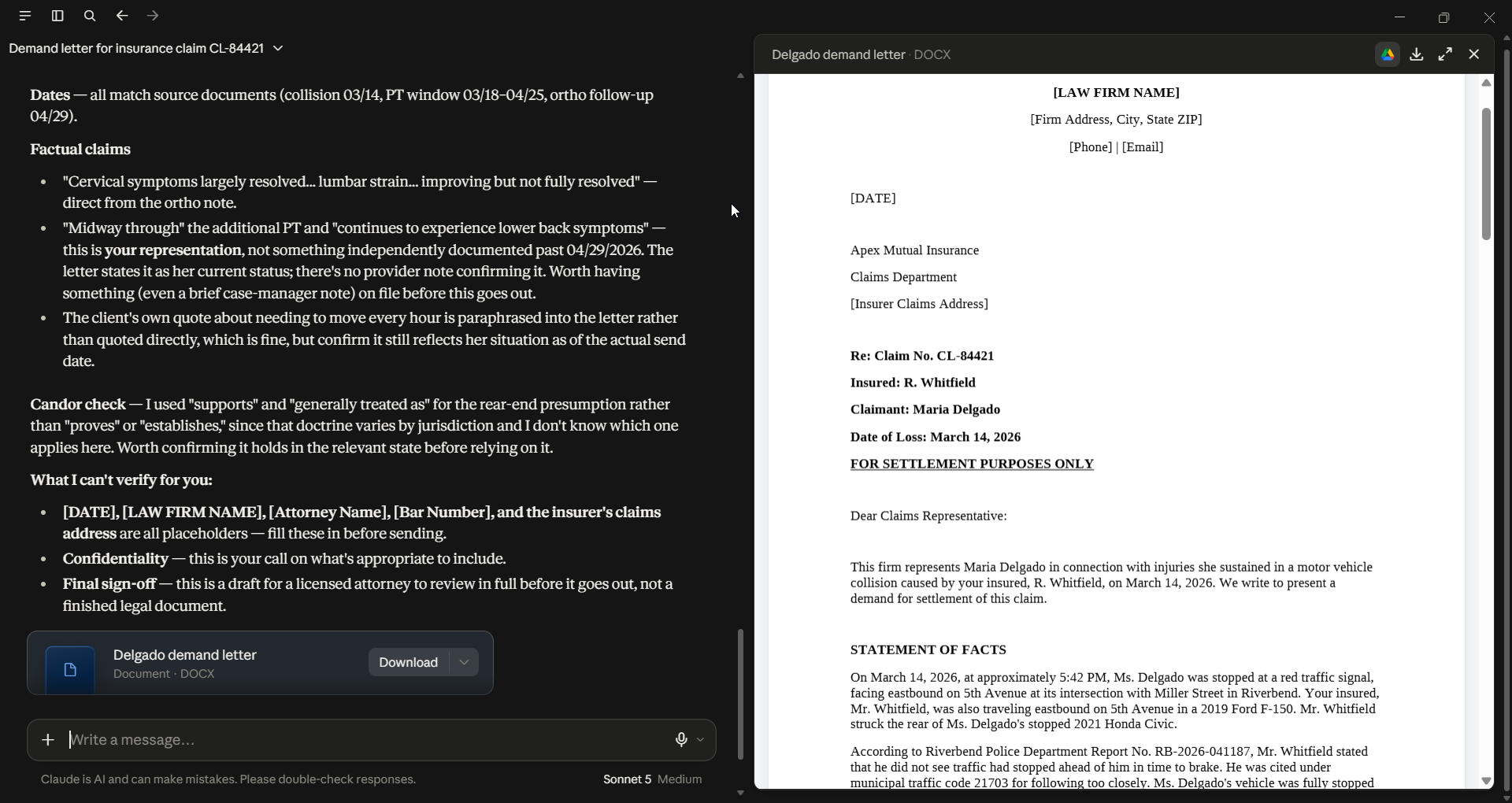
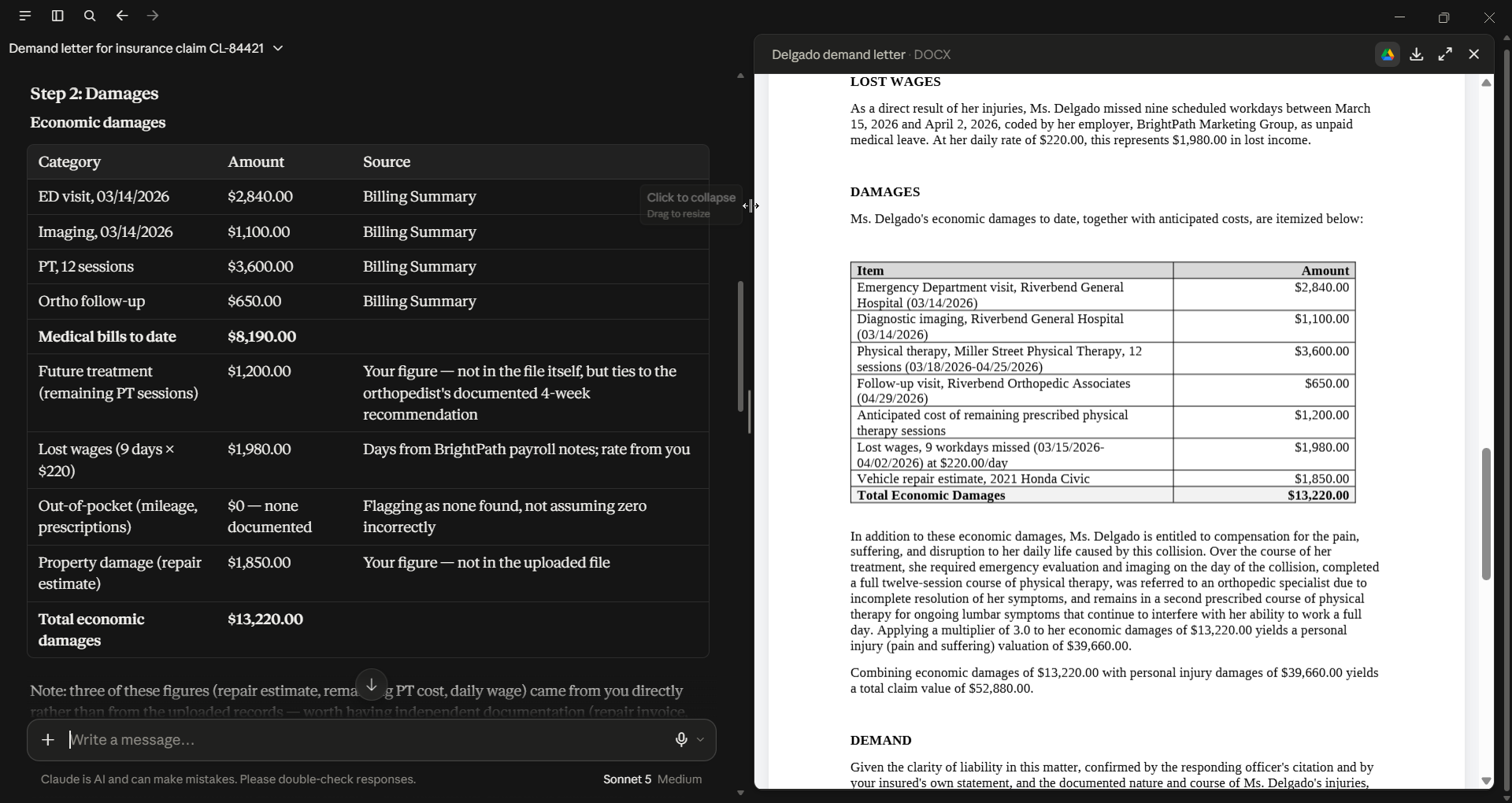
A chronological treatment timeline built from the six source documents, an economic damages itemization totaling $8,190 traced to specific bills, a personal damages calculation using a 2.75 multiplier justified by documented treatment duration and ongoing symptoms, a liability narrative citing the police report's following-too-closely citation, and a final demand letter with a verification note confirming every figure and date against the source file before presentation.

One more thing before you submit, not part of the form but worth doing first. Read through all 27 affirmations yourself, slowly, especially the UPL one and the domain expertise one. I can draft copy all day, but signing that list is you making a legal representation, and that's not something I should be nodding you through without you actually reading each line yourself first.
Sanitized example, not professional advice. All sales final — use the preview to confirm fit before purchase.
Compatible models
The author has tested this tool on the providers below. The specific model list updates automatically as providers ship new models or retire old ones. Compatibility with providers not listed below is not guaranteed — the tool may not produce equivalent results outside the tested set.
Data handling
Seller of record
- Display name
- DESLY ATEKE NDAYA
- Location
- New Mexico
This is the party you have a software-license contract with. If you aren't satisfied with the tool, please contact this party directly to work it out.
Version history
- v1.0.0Current2026-09-05
Existing buyers receive new versions free of charge. Pin to a specific version from your library if your workflow needs the exact bundle behavior of an earlier release.
Buyer reviews
No reviews yet — be the first after you buy.
- Tools are starting points, like templates. Read every file in the bundle before running, modify for your workflow, and assess safety and legal implications for your use case.
- Outputs vary run-to-run. Generative AI is non-deterministic by design — the same tool on the same input can produce different results, and outputs can vary across sessions, model versions, and provider load conditions. Your input will differ and your model may differ, so you should expect your output to vary from the example above. Variance is normal, not a defect.
- All sales final. Tools are immediately downloadable digital goods.